The executive analyzed how technological transformation, climate risks, and social changes are driving insurance’s evolution towards models centered on prevention and services.
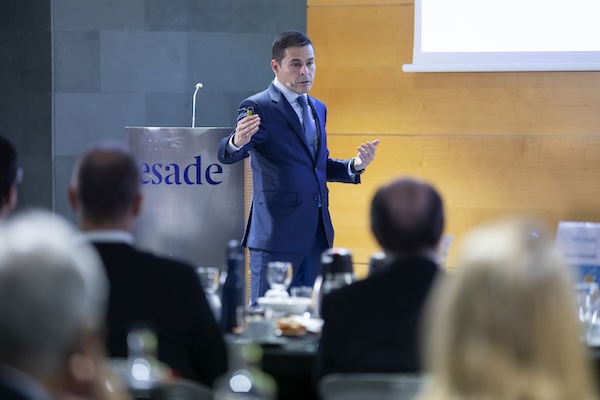
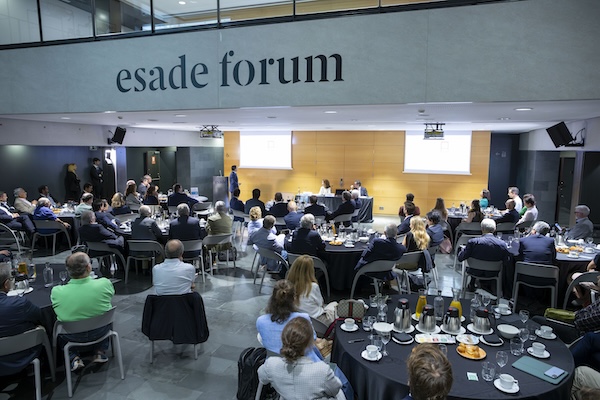
“Insurance is involving from claims compensation to the provision of services and prevention,” said Hugo Serra, the CEO of GCO, which will become Grupo Occident on December 1, at the new Matins Esade session. Serra explained that the insurance sector is in the midst of an in-depth transformation of its traditional model: the business, which historically has revolved around the settlement of accident claims, has gradually expanded its value proposition by providing services and is now working towards increasingly preventive models.
The goal, he said, is to develop solutions that anticipate risks, lower their impact, and, whenever possible, prevent accidents from happening. This evolution is also reflected in the diversification of Occident’s services, with initiatives associated with pet, home, and rental property insurance; assistance for elderly people; adapting homes for people with special needs; and psychological care.
“We view the insurance business not only as a business of risk but also as a service-provision business,” Serra said. In this sense, he highlighted the group’s aim to build an ecosystem of solutions that bring customers more value and support them at different stages in their lives.
A sector facing new challenges
The insurance sector is facing a scenario marked by major structural, economic, and regulatory transformations. Among the main challenges, Serra highlighted the ageing of the population, sustainability, technological transformation, economic volatility, the trends in interest rates, and geopolitical uncertainty.
Against this backdrop, he particularly highlighted climate risks and the impact of certain weather phenomena, which pose new challenges for both people and insurance companies. Serra defended the need to work towards models with a greater capacity for anticipation. Prevention, he said, can help protect customers better, limit the consequences of these episodes, and improve the sector’s response.
Artificial intelligence with a measurable return
Artificial intelligence is another main vector of transformation in the insurance sector. Serra explained that Occident is embracing it in a very selective, cautious way, assessing in which processes it can bring a differential value and in which people’s involvement is still more effective.
The CEO of Occident recalled that implementing this technology entails high development and maintenance costs, quick obsolescence, and significant energy consumption associated with data centers. For this reason, he asserted that any investment in artificial intelligence should meet a specific need and generate a clear return, and its contribution to the business should be able to be rigorously measured.
Growth, profitability and solvency
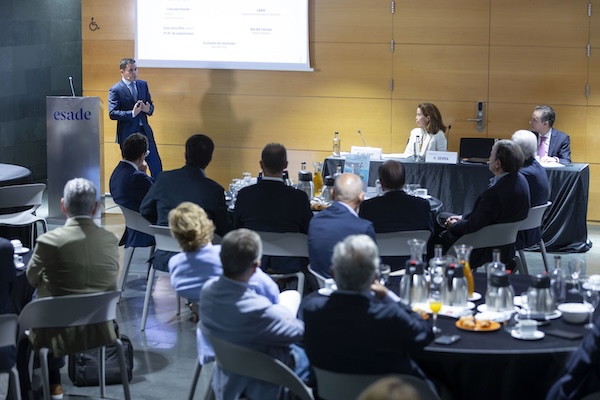
During the session, Serra also presented the main lines of Occident’s 2025-2027 strategy, whose purpose is ‘to be leaders in protecting and supporting people and companies in all stages of their lives.” The plan is based on three strands: growth, profitability, and solvency.
To work towards these goals, Occident has made growth, digitalization, efficiency, and transversality its strategic priorities. The projects underway include promotion of the commercial model, development of a comprehensive picture of the customer, digitalization of processes, evolution of its tech platforms, and improved operational efficiency.