The president of Henkel Ibérica shared the keys that have allowed the company to keep up its steady growth over time

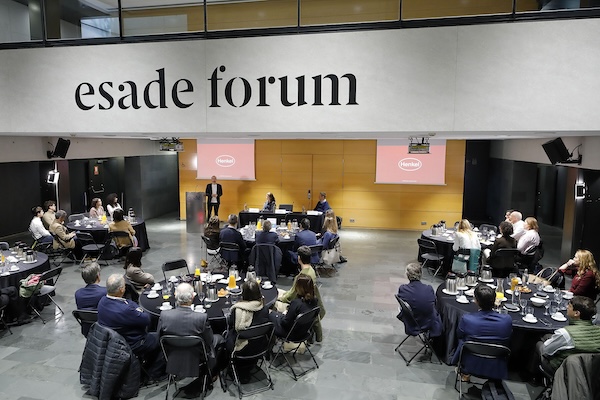
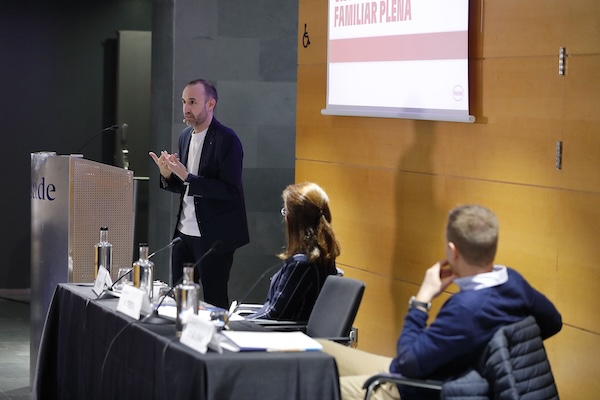
In a business ecosystem where long-term survival is the exception not the rule, the recent Matins Esade session offered a masterclass on resilience. Entitled “The Secret to Business Longevity,” Adrian Orbea (Lic&MBA 06), president of Henkel Ibérica and an Esade alumnus, outlined the history of a company that has reached a historical milestone in 2026: 150 years of history.
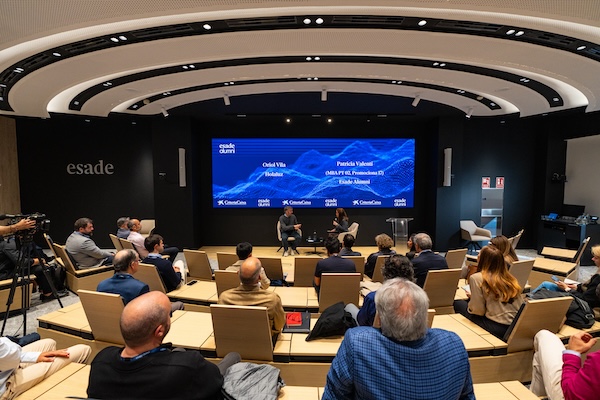
This is no minor event. As Oriol Iglesias, director of Esade’s Marketing Department, recalled in his introduction to the session, the current environment is so dynamic and uncertain that companies’ lifecycles have been drastically curtailed. While in the past corporations would dominate the market for decades, today they barely survive an average of 15 years, according to indicators like Standard and Poor’s. Given this backdrop, Henkel is a touchstone that has not only survived but led.
The balance between legacy and the cutting edge
The session focused on the necessary tension that all longstanding companies have to manage. According to Oriol Iglesias, success lies in knowing how to manage the past and future simultaneously, maintaining unique values while fostering a culture geared at innovation.
Adrian Orbea, who has more than eighteen years of experience at Henkel and combines the presidency of the Iberian subsidiary with the general management of the Consumer Adhesives Division, personifies this spirit of commitment and constant evolution. During his talk, he underscored that Henkel’s track record is not only a look back at the past but also a solid foundation for future challenges. “Our long history and the pioneering spirit that defines us places us in an excellent position to deal with the challenges that the future will bring with the utmost assurances,” he claimed.
The 5 cornerstones of longevity
Ever since it was founded in Düsseldorf, Germany, Henkel has gone from being a local to a global company with a team of approximately 47,000 employees all over the world. It has been in Spain since 1961, where it has been a key driver of the economy through its two main business units: Adhesive Technologies and Consumer Brands.
The president of Henkel Ibérica believes that longevity is a matter not of luck but of strategic preparation. Orbea used a powerful analogy to explain this: “A company’s success is very similar to a person’s long, full life.” The executive outlined five fundamental cornerstones that act as the organization’s life system:
1. Remaining active: Constant activity leads to evolution. One tangible example of this dynamism is Henkel’s commitment to Barcelona, where the company has created benchmark centers like the Supply Chain Planning Hub and the Procurement Hub for Indirect Material and Services.
2. Healthy nutrition: Orbea explained that the company’s growth is inherent in strategic acquisitions of iconic brands like Loctite and Schwarzkopf. However, healthy nutrition also means knowing what to get rid of: “Divestments are also strategic,” he claimed, underscoring the importance of continuing to selectively invest in key technologies and brands.
3. Social life: Longevity is linked to strong connections. Henkel is a family company, and 60% of its shares are controlled by the family. According to Orbea, this factor is what gives it stability and allows it to retain a long-term vision.
4. Youthful spirit: Despite its 150 years, Henkel tries to maintain creativity and entrepreneurship. “We are a multinational with the heart of a startup,” Orbea proclaimed. This mindset is backed by figures: around 7% of the staff is devoted exclusively to innovation; the company invests more than 3% of its sales in this area; and the largest investment in a single building in the company’s history is the new Inspiration Centre in Düsseldorf, which measures 47,000 square meters and has 30 laboratories and four technology centers, coupled with its new openings in Shanghai and Brazil.
5. Strong purpose: A commitment to sustainability is in Henkel’s DNA and materializes in its Net Zero strategy. Orbea highlighted that it is not only an ethical matter but their “main competitive advantage.”