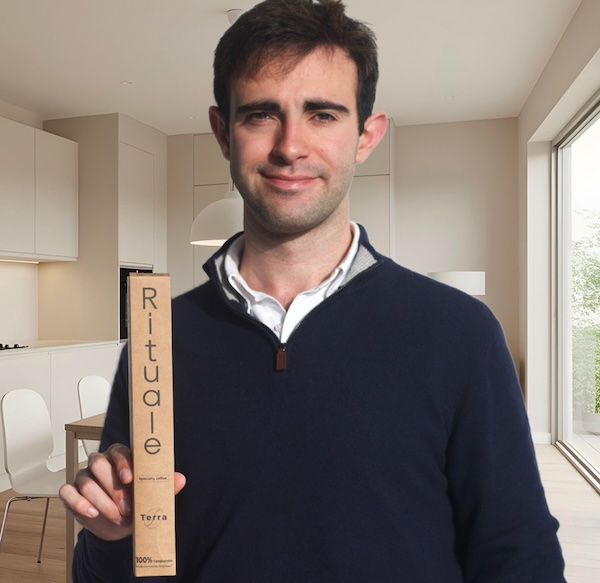
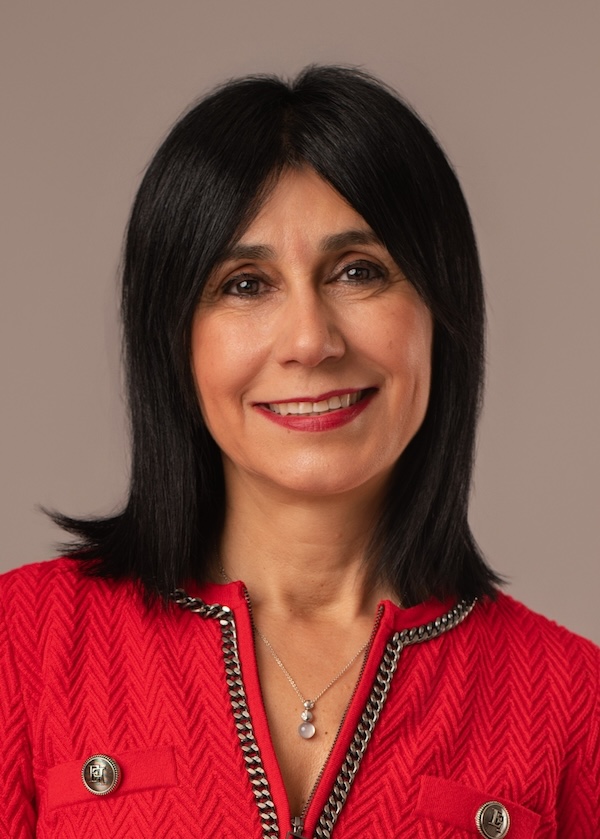
Elena Guede, a chemical engineer with an MBA and a PhD, is a touchstone in the sustainable transformation of the industrial sector and executive leaders’ evolution towards the board of directors
Elena Guede has had a solid international career in industrial multinationals. She was the first factory director in Spain within the cement sector and a member of management committees in different companies. An alumna of the Consejeros 21 Program and a participant in Esade’s mentoring programs, her profile combines in-depth experience in management, ESG, and innovation with a strategic view of corporative governance, bringing a practical perspective to the board based on the real transformation of the business and leadership.
- Your career is an example of a successful transition from executive management to corporate governance. At what point did you decide that it was the natural step, and how did the Esade Consejeros Program help you change your “chip” from executive to board member?
 My transition to corporate governance was never planned from the start but rather a natural evolution of my career. I began as a proprietary director in different industrial companies more than fourteen years ago, and that early experience was very revelatory. It enabled me to see companies from a different perspective, one that is more strategic and less executive, and to understand the real impact that a board can have on the direction and future of an organization.
Over time, as I participated on different boards, I confirmed that it was a role in which I felt comfortable and could bring value, not only through my management experience but also through my knowledge of strategy, sustainability, and business transformation. At that point, I understood that it could be a wonderful way to evolve professionally: contributing to the development of other companies, sharing lessons learned throughout my career, while also continuing to learn from new business situations.
The turning point came when I decided to take the step of formally preparing myself for this new role. The Esade Consejeros Program was crucial in this process. It helped me to change my “chip” from executive to board member: you go from being involved in direct management and operational decision-making to taking a more global, supervisory view that involves constructive questioning and generating long-term value.
Plus, the program enabled me to learn more about essential aspects of corporate governance – like fiduciary responsibilities, risk management, and the dynamic of boards – and especially to gain awareness of the importance of the independent role, exercising your own judgement, and having a diversity of perspectives. It unquestionably served as an accelerator that gave me both the confidence and the tools I needed to gear a major part of my career towards the arena of boards of directors.
Today I clearly see that it’s not only a transition but also the start of a new professional stage complementary to my experience as an executive, where I can continue to contribute, learn, and make an impact.
- How does you extensive international experience in industrial multinationals influence the strategic decisions you make on a board of directors?
I believe that my international experience has definitely been one of the factors that brings value to my current role as a board member. Having worked in industrial multinationals for years, operating in more than 29 countries under very different circumstances has enabled me to develop an in-depth understanding of how culture, regulations, and the local context influence business decision-making.
On a board of directors, this translates into a better ability to analyze situations from multiple perspectives. Understanding cultural differences is not just a matter of sensitivity but also a strategic advantage: it allows you to anticipate risks, identify opportunities, and especially better interpret how certain decisions may impact different markets or stakeholders.
Plus, working with very diverse teams – in terms of culture, training, and ways of thinking – has taught me the enormous value of plural thinking. The most effective boards are those that bring in different perspectives and foster a constructive debate. My experience helps me promote this type of dialogue, to rigorously ask questions, and to enrich decisions from a broader perspective in order to create and implement the company strategy.
Ultimately, one purpose of the board is precisely to support and challenge management to define the strategy. And my international experience enables me to contribute with a more global perspective, connecting what is happening in different markets and helping take more solid, informed decisions aligned with the company’s future.
- You have spearheaded the sustainability strategy at giants like CRH and now Oficemen. From a board’s perspective, how do you get sustainability to be more than just a compliance report and instead become the real engine driving a company’s competitiveness?
I firmly believe that the key is shifting our view of sustainability as a reporting exercise and instead putting it at the core of the business strategy. When the board approaches it from this angle, it goes from being an obligation to becoming a real lever of competitiveness and value creation.
First, sustainability enables you to manage and anticipate risks that are clearly strategic today, including regulatory, climatic, operating, or reputational risks. Integrating sustainability into the board’s decision-making helps the company to avoid reacting too late but instead to get ahead of the game by adapting its business model and boosting its resilience in an increasingly tough environment.
But most importantly, sustainability opens up a vast field of opportunities. We’re talking about access to new markets, development of a portfolio of more sustainable products and solutions, and response to an increasing demand from customers, investors, and society. In my experience, when it is properly folded into the strategy, it drives innovation and enables the company to clearly differentiate itself in the market.
Plus, it has a direct impact on reputation and on the social license to operate. Companies that are leaders in sustainability create more trust, attract talent, and forge more solid relationships with their stakeholders, all of which are essential for long-term success.
This approach is particularly important in industry. We have a major ability – and responsibility – to improve our environmental impacts, from decarbonization to the circular economy, and to make a significant contribution to social and economic development by creating jobs, advancing regions, and participating in the transition to more sustainable models.
That’s why the board’s role is clear: to ensure that sustainability is fully integrated into strategy, that it is measured with the same standards as any other business variable, and that it is used as what it truly is: an engine driving transformation, innovation, and long-term competitiveness.
- What level of technical knowledge do you think board members should have in order to properly oversee risks?
A board member does not need to – and should not – replace the executive team in detailed technical knowledge, but they should know enough to understand the business’s key risks, ask the right questions, and exercise rigorous, independent judgement.
More than technical depth, what is truly important is having a broad, integrative view of risk, that is, being able to connect financial, operating, regulatory, technological, or reputational risks and understanding how they interact with each other and how they can impact the business’s strategy and sustainability in the long term.
Having said this, the board should also make sure that the risks are identified and measured as rigorously as possible using clear metrics, scenarios, and well-grounded analyses. In increasingly complex environments – like cybersecurity, sustainability, and geopolitics – having a board with a diverse range of knowledge and complementing this internal knowledge with outside experts when needed are crucial.
The true value of a board member is their ability to constructively question, avoid biases, enrich the debate, and ensure that the decisions are made with all the relevant information on the table. And, of course, to ensure that there are solid, well-defined mitigation plans that are aligned with the company’s strategy.
In short, the goal is not to know more than the experts but to have the judgement, perspective, and discipline needed to properly oversee the risks and make sure that the organization is prepared to manage them.
The true value of a board member is their ability to constructively question, avoid biases, enrich the debate, and ensure that the decisions are made with all the relevant information on the table.
- After going through the Esade Alumni Mentoring Program, what is the most important piece of advice you’d give an executive who aims to join a board of directors?
My most important piece of advice would be for them to tackle it as a strategic career decision, not simply a natural step.
The first thing is to reflect on whether they really want to be a board member and to understand what this entails: it’s not only professional recognition but also involves taking on responsibility, living with risk, and knowing how to judiciously manage it.
Secondly, they should be realistic about whether they can do it. Being a board member requires time, preparation, and commitment, and it also means having the support of the organization in which you work if you’re in an executive role.
After that, it’s crucial to identify what you uniquely bring: your experience, your knowledge of the sector, your strategic vision, or your skills. A board is looking not for general profiles but for specific value.
And finally, you have to actively work to get there: getting training in corporate governance, boosting your visibility, building a solid professional story – focused on achievements and impact – and cultivating your network of contacts, because trust is an essential ingredient in accessing a board of directors.
In short, being a board member is not a destination; it’s the start of a new professional period that requires preparation, intention, and a clear value proposition.
- What are the most important soft skills for candidates who aspire to be independent board members today?
In my opinion, beyond technical experience, the unique value of an independent board member is mostly their soft skills. That’s what determines the quality of the debate on a board and ultimately the quality of the decisions.
The first thing, hands down, is active listening. A good board member knows how to really listen: to the executive team, to the other board members, and to different viewpoints, even – or especially – when they are divergent. This leads to more solid judgements and avoids biased decisions.
Closely tied to this are capacity for analysis and critical thinking. They mean knowing how to ask the right questions, to constructively question, and not to take anything for granted while always reserving independent judgement.
Another key skill is communication and influence. The idea on a board is not to impose but to argue clearly, generate consensus, and – when needed – defend a position firmly yet respectfully.
Conflict negotiation and management are also essential. By definition, boards are spaces with diverse opinions, and knowing how to channel these differences towards constructive decisions is a critical skill.
These are also joined by emotional intelligence in order to accurately read the board’s dynamics, understand the interests at stake, and contribute to a climate of trust and cooperation.
Finally, I would highlight strategic vision and a long-term mindset, combined with integrity and a sense of responsibility. A board member should be able to elevate the debate, connect the issues with the strategy, and always act with strong ethical commitment.
- You have managed accounts with high results and complex industrial transformations. What is the biggest leadership challenge you’ve had to deal with?
I’ve had to face different challenges throughout my career, but probably the biggest leadership challenge has been managing in-depth transformation processes in complex industrial environments, where short-term results have to be aligned with long-term structural changes.
One clear example was when I took over the management of an industrial plant in a context of integration and change, with the goal of significantly improving efficiency, results, and organizational culture. The idea was not only to optimize the bottom line – although that, too – but to transform the way of working, build new teams, boost trust with them, and rebuild the relationship with key stakeholders like trade unions, public administrations, and the local community.
The main lesson I learned was understanding that this type of transformation is not led with good strategy alone but with approachable leadership based on listening, transparency, and coherence. You have to make difficult decisions and manage uncertainty while also being able to mobilize people towards a common goal. Practicing what you preach is a maxim that was crucial in that situation.
For me, success came from combining a clear vision – what we wanted to achieve and why – with rigorous execution and a strong people-orientation. We managed to significantly improve the bottom line, boost efficiency, and strengthen internal and external relationships, but most importantly we built a more solid organization that was prepared for the future.
This type of challenge changes you because it teaches you that real leadership consists of creating trust and aligning wishes at times of change.
- How do you think strategic networking influences a board member’s career, and what role does the Esade Alumni community play in this ecosystem?
I think that strategic networking is a key part of a board member’s career, because boards are largely built upon trust. Beyond knowledge or experience, it is essential for your profile to be known, understood, and valued in the right places. And this doesn’t happen by chance; it requires intention, coherence, and time.
In my experience, networking is not so much “being” as “contributing.” The goal is to build authentic relationships, share knowledge, learn from others, and create connections that turn into opportunities over time. The process is much more qualitative than quantitative.
In this sense, the Esade Alumni community has been particularly important for me, not only because of the professional level of its members but also because of the type of bond created: close, generous, and based on shared values. It’s a group where you can compare ideas, get answers to your questions, find role models, and especially feel supported in a professional phase which can, at times, be uncertain.
To me, Esade has been much more than an education. It has been and continues to be a space of growth, reflection, and connection with people who are experiencing similar challenges. And on the journey to the board of directors, this is extremely valuable both professionally and personally.